Conducting career
The Conductor
Berlin · New York · Moscow · Riga
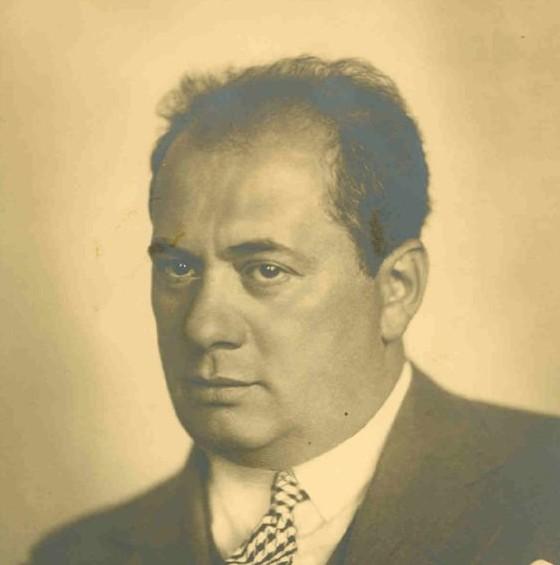
On November 7, 1912, the newly constructed Deutsches Opernhaus in Berlin-Charlottenburg opened with Beethoven's Fidelio, conducted by the 31-year-old Ignatz Waghalter. He had previously conducted at Berlin's Komische Oper and the opera house in Essen. His selection, as a Polish-born Jewish musician, provoked protests from German nationalists and antisemites, with death threats directed at both the opera house intendant Gregor Hartmann and Waghalter himself. Hartmann refused to yield, the premiere proceeded as planned, and Waghalter's conducting received press praise.
Between 1912 and 1923, Waghalter's position at the Deutsches Opernhaus centered him in Berlin's musical life. He mastered the Italian repertoire and introduced major Puccini works to skeptical German audiences. For the 1913 German premiere of La Fanciulla del West, Puccini insisted that Waghalter conduct. The premiere succeeded spectacularly, earning seventy curtain calls. Later that year, Waghalter conducted Manon Lescaut with comparable triumph.
Waghalter's reputation expanded internationally as a guest conductor. After the Deutsches Opernhaus closed in 1923 due to the inflationary crisis, he traveled to America, becoming General Music Director and principal conductor of the New York State Symphony Orchestra. Returning to Germany in late 1925, he served as General Music Director for Ufa, then the largest film production company in Europe, composing the original score for Wunder der Schöpfung.
In 1930, Waghalter spent six months conducting at Moscow's Bolshoi Opera. Latvia subsequently engaged him as General Music Director and principal conductor at the National Opera. He returned to Berlin in late 1932, before the Nazi accession of January 1933 ended his German career.
Upon arriving in America for the second time, Waghalter undertook a historically significant project: founding the American Negro Orchestra. Despite support from James Weldon Johnson, Marian Anderson, and Duke Ellington, insufficient funding prevented continuation after the successful inaugural performance.
Waghalter also established the New York Doctors' Orchestra, which persists today. In December 2016, his memory was honored with performances of his Violin Concerto and The New World Suite, conducted by Alexander Walker — who had discovered and reconstructed the long-lost handwritten orchestral score in 2013.
Waghalter's German prominence as a conductor appears in numerous recordings, mostly made between 1924 and 1926 with the orchestra of the Städtische Oper, the successor to the Deutsches Opernhaus. These recordings reveal a modernist conductor who combined passion with rigorous technical discipline.
Documentary · Overture 1912
The founding of the Deutsches Opernhaus
In November 2012, the centenary of the founding of the opera house (now the Deutsche Oper) was marked with the premiere of Overture 1912, a documentary by Enrique Sánchez Lansch. With the kind permission of Arthaus Music, we present the segment of the documentary that recalls the founding and first performance of the Deutsches Opernhaus, including interviews with the long-time dramaturg Curt Roesler and David Waghalter Green.
Historical recordings · 1924–1926
Waghalter conducts the orchestra of the Städtische Oper
Twenty-two surviving sides recorded in Berlin between 1924 and 1926: overtures, fantasias, and orchestral suites drawn from Mozart, Rossini, Verdi, Puccini, Mascagni, Gounod, Mendelssohn, Offenbach, Strauss, and d’Albert.
Mozart
- The Marriage of Figaro — Overture
- Die Entführung aus dem Serail — Overture
- Symphony No. 39 in E♭ — Menuett
Rossini
- William Tell — Overture (Conclusion)
- La gazza ladra — Overture, Part 1
- La gazza ladra — Overture, Part 2
Verdi
- Rigoletto — Fantasia, Part 1
- Rigoletto — Fantasia, Part 2
Puccini
- La Bohème — Fantasia, Part 1
- La Bohème — Fantasia, Part 2
Mascagni
- Cavalleria rusticana — Fantasia, Part 1
- Cavalleria rusticana — Fantasia, Part 2
Gounod
- Faust — Potpourri, Part 1
- Faust — Potpourri, Part 2
Mendelssohn
- A Midsummer Night's Dream — Scherzo
Offenbach
- Orpheus in the Underworld — Overture, Part 1
- Orpheus in the Underworld — Overture, Part 2
- The Tales of Hoffmann — Menuet & Barcarolle
Johann Strauss II
- Die Fledermaus — Overture, Part 1
- Die Fledermaus — Overture, Part 2
d'Albert
- Tiefland — Fantasia, Part 1
- Tiefland — Fantasia, Part 2
Continue
- Harlem · 1937–40
The Negro Symphony Orchestra
Waghalter's American conducting initiative, with the 1939 founding brochure and the Baltimore Afro-American interview.
Read → - Composed 1938–39
The New World Suite
Written for the American Negro Orchestra; rediscovered in 2012; given its world premiere in Poznań in 2019.
Read → - Catalogue
Compositions
Waghalter the composer — operas, operettas, orchestral, concerti, chamber, songs.
Read →