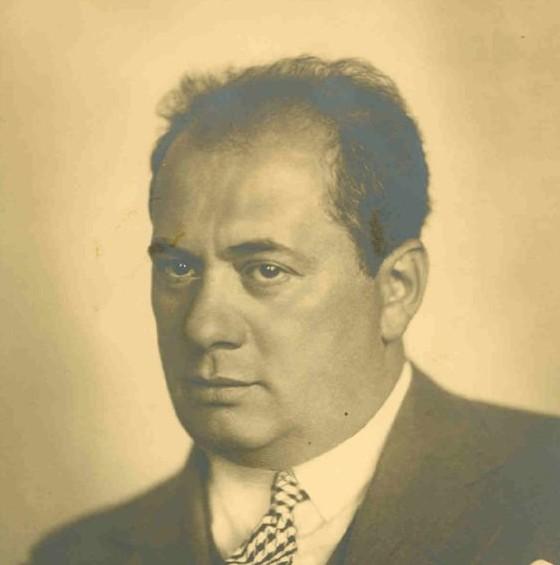
1938–1939 · Recovered 2012 · Premiered 2019
The New World Suite
Ten short movements composed in Harlem for the Negro Symphony Orchestra, never heard in the composer’s lifetime, and world-premiered eighty years later.
The New World Suiteis a ten-movement orchestral work composed by Ignatz Waghalter in New York between 1938 and 1939 for the Negro Symphony Orchestra — the institution he had founded the year before in Harlem. The Suite was never heard in the composer’s lifetime. The orchestra dissolved before the work could be performed; the manuscript lay among Waghalter’s papers for seventy years; and the New World Suite received its world premiere only in May 2019, in Poznań, Poland.
The Suite is the musical embodiment of the Harlem episode in Waghalter’s life. It carries the weight of an extraordinary cross-cultural collaboration: a Polish-Jewish refugee from Nazi Germany, writing for an orchestra of African American musicians, in a city that had embraced him as Berlin no longer would. The New World Suite responds in audible terms to what Waghalter encountered in America — to its open spaces, the inflections of jazz, the aspirations of the musicians for whom the work was written, and to the democratic ideal of a new cultural world. Its ten short movements display, in concentrated form, the qualities that define Waghalter at his best: buoyancy, warmth, melodic abundance, an irrepressible optimism, and a lightness of orchestral hand that avoids the bombast of much late-Romantic writing.
The work also carries a theoretical weight that bears on the assessment of Waghalter’s entire output. It refutes — in the only way available to music, the way of audible evidence — the postwar image of Waghalter as a backward-looking late Romantic incapable of engaging with the world that had displaced him. The Suite engages the twentieth century from a different direction than the avant-garde: from the side of melody rather than the side of rupture, from the side of communicability rather than the side of estrangement. The two are not the same as backwardness and progress. They are alternative responses to the same historical crisis.
For an orchestra that did not survive to hear it
The Negro Symphony Orchestra, 1937–1940
Waghalter founded the Negro Symphony Orchestra in 1937, in the months after his arrival in New York. It was supported by James Weldon Johnson, Marian Anderson, and Duke Ellington; its concertmaster was Mildred Franklin. In a January 1939 interview with The Baltimore Afro-American, Waghalter described the orchestral work he was then composing for the orchestra and placed it within the founding commitments of the project. Music, he told the paper, was “the strongest citadel of universal democracy, knowing neither color, creed, nor nationality.”
The orchestra could not be sustained. Insufficient funding, institutional resistance, and the broader crisis of the period combined to dissolve the ensemble before the New World Suite could be performed. Waghalter never heard his music played by the orchestra for which it had been written. He continued to compose — the operetta Ting-Ling, the small piano piece Remembrance in 1941, the WQXR radio broadcast of Ahasuerus und Ester with his daughter Beatrice singing Ester — but the Suite went into the drawer, and there it remained for the rest of his life and for two generations afterwards.
The discovery · 2012
A 200-page manuscript in a Detroit box
In 2012, the British conductor Alexander Walker — who had recorded Waghalter’s Violin Concerto with Irmina Trynkos and the Royal Philharmonic the year before — travelled to Detroit to examine the boxes that contained what remained of the composer’s musical legacy in the possession of his grandson, David Waghalter Green. Buried at the bottom of one of the boxes, inside a large manila envelope, was a 200-page orchestral score, written in Waghalter’s hand in ink and pencil. Coffee stains marked some of its pages. It was the work that Waghalter had described to The Baltimore Afro-American seventy-three years earlier.
“What do you make of this?” David Green asked.
“This is simply astonishing music,” Walker replied, “and it must be recorded.”
He kept the promise. Walker prepared a performable score from the unproofed handwritten draft, and six months later he recorded the New World Suite in Moscow with the New Russia State Symphony Orchestra. The recording was released by Naxos in 2015 as the second Waghalter disc on the label (catalogue 8.573338), paired with the Overture and Intermezzo from his 1914 comic opera Mandragola and his 1936 March for Peacein honour of the Czechoslovak president Tomáš Masaryk. Reviewers responded to the Suite’s “rich melodic imagination” and what one called its “approachable and lively music.” On the recording, listeners could hear, for the first time, what no audience had heard in the composer’s lifetime.
World premiere · May 17, 2019
Filharmonia Poznańska
The New World Suite received its world premiere in concert on May 17, 2019, eighty years after composition. The Israeli-born conductor Ariel Zuckermann led the Filharmonia Poznańska in Poznań, Poland; the performance was broadcast by Deutschlandfunk Kultur.
The programme paired the Suite with the Piano Concerto of Karol Rathaus (1895–1954) — like Waghalter, a composer who escaped Nazi persecution and reached the United States in 1939, and like Waghalter a figure largely missing from the postwar canon. The soloist was the Canadian pianist Daniel Wnukowski.
The audience response was emphatic. At the conclusion of the Suite, Maestro Zuckermann was recalled repeatedly to the podium and satisfied the audience’s demands by repeating the final movement.
Excerpts · Movements 1, 5, 7, 8
From the 2015 Naxos recording
Movement I
Movement V
Movement VII
Movement VIII
The full ten-movement suite is available on Naxos (8.573338, 2015), paired with the MandragolaOverture and Intermezzo and Masaryk’s March for Peace. See the Music page for the discography in full.
Continue
- Harlem · 1937–40
The Negro Symphony Orchestra
Waghalter's founding initiative in Harlem — the orchestra for which the New World Suite was composed.
Read → - Article · April 2019
How the New World Suite Was Discovered
Alexander Walker's 2012 visit to Detroit, and the manila envelope at the bottom of the box.
Read → - News · September 2019
World Premiere in Poznań
Eighty years after composition, the New World Suite is heard in concert for the first time.
Read → - Listen
Music
The 2015 Naxos release with full track list and audio excerpts.
Read → - Essay
Why did Ignatz Waghalter become unknown?
The foundational essay, which treats the New World Suite as the audible refutation of Waghalter's postwar image.
Read →