Family
The Waghalter family
A Polish-Jewish musical dynasty across four generations
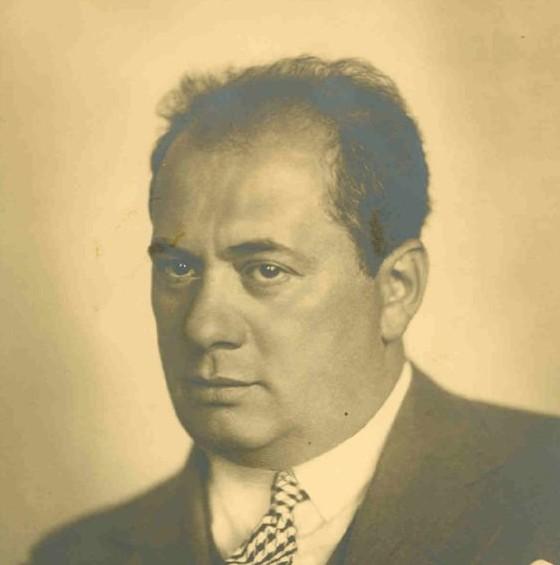
The Waghalter family was one of the more remarkable Polish-Jewish musical dynasties of the late nineteenth and early twentieth centuries, with a documented musical inheritance reaching back at least to the early decades of the nineteenth century. Its earliest known figure of public stature was the violin virtuoso Levek (Laibisch) Waghalter, whose playing was praised by Paganini, and whose musical line continued unbroken through the generations that followed. By the time of Ignatz Waghalter's birth in 1881, the family was a coherent intermarried kin group rather than a set of separate branches: Ignatz's parents, Avram Waghalter and Karola Szulc, were first cousins, so that the Waghalter and Szulc lines, already joined in earlier generations, were rejoined in his. The Maelzaks entered the family through a subsequent Szulc-Maelzak marriage.
Across this network the family produced professional musicians of substantial accomplishment for at least four generations. Among Ignatz's brothers, Henryk Waghalter (1869–1961) became a renowned cellist at the Warsaw Conservatory; Wladyslaw (1885–1940) was a noted violinist; Joseph was likewise a working musician of stature. The Szulc cousins of his generation included [names and brief descriptions to follow as you assemble the page]. The Maelzak relations included [the same]. Many of these musicians were named, alongside Ignatz himself, in the Lexikon der Juden in der Musik published by the Nazi state in 1940 — a roll of proscription that registers, in its own perverse way, the prominence the family had achieved across Polish, German, and broader European musical life.
The catastrophe destroyed the family as a coherent musical culture. Wladyslaw Waghalter died on October 20, 1940, hours after being summoned to Gestapo headquarters in Berlin. Ruth Waghalter was murdered at Auschwitz on February 11, 1943. Jolantha Waghalter escaped to Peru and built a long career as first violinist of the National Symphony Orchestra in Lima. Ignatz reached New York in 1937 and died there in 1949. Others of the family were scattered or lost in the dispersal. What survived was a fragmentary record of what had been a continuous musical inheritance — and the work of reassembling that record is part of the task this section of the site sets itself.
The pages that follow set out the genealogical structure of the family, brief biographies of its principal musicians across the Waghalter, Szulc, and Maelzak lines, surviving recordings and documents where these exist, and the unfolding scholarly recovery of a dynasty whose loss was among the cultural casualties of the twentieth century.
Continue
- Featured · 1913–2001
Beatrice Waghalter
Ignatz's younger daughter — soprano, diseuse, and Jüdische Kulturbund performer. Her biography, photographs, the 1989 Sender Freies Berlin radio interview, and recordings of her singing.
Read → - Biography
Ignatz Waghalter
The composer and conductor. Warsaw, Berlin, exile, Harlem.
Read → - From the archive
Photos
Family photographs, manuscripts, programs, and press cuttings — the primary record on which the family's recovery rests.
Read →